
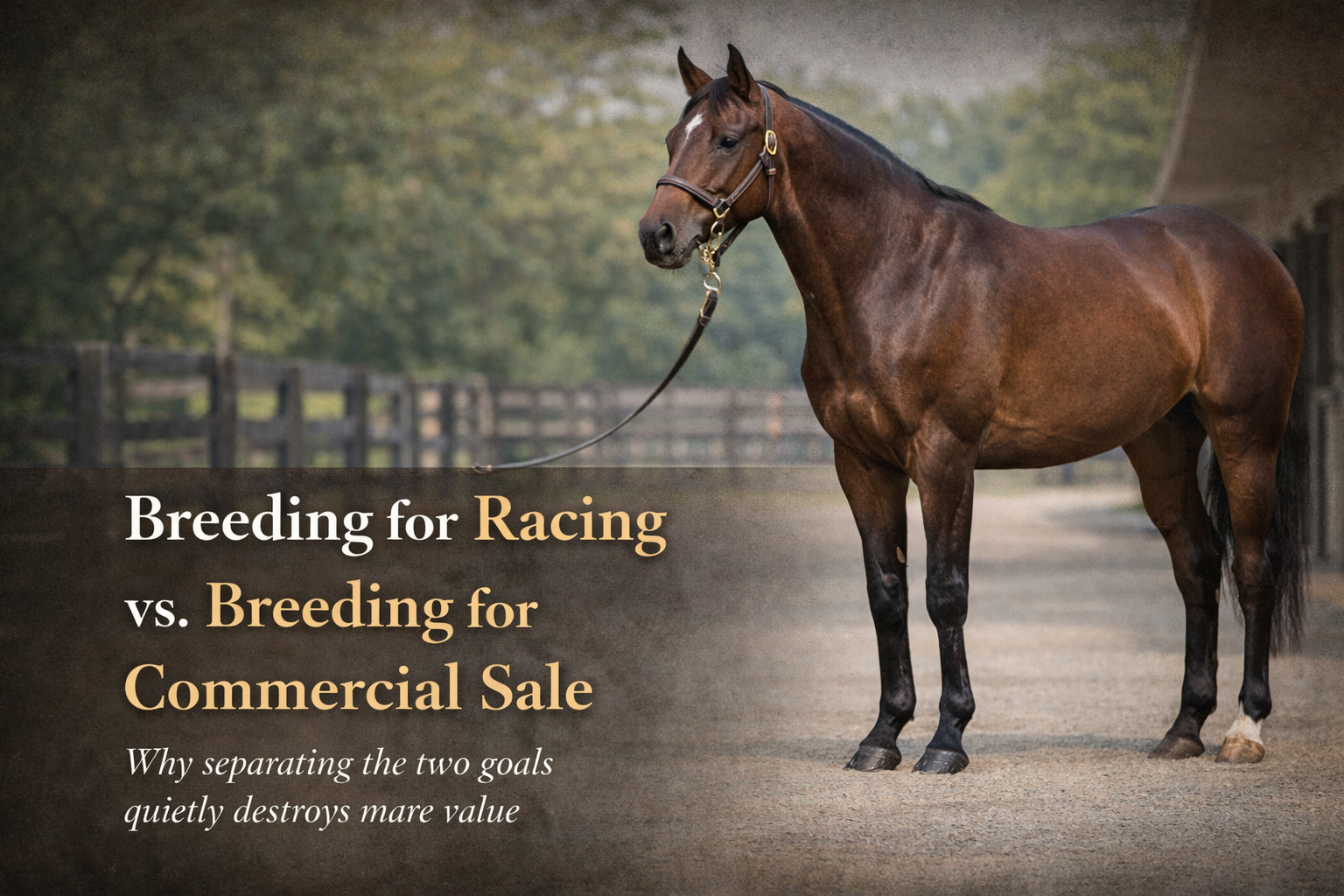
Breeding for Racing vs Breeding for Commercial Sale, A False Divide
The market may appear divided between selling and racing, but the objective is the same. Produce the best possible horse the mare can make with the right stallion.
Thoroughbred breeding is often framed as a choice between two goals. Breed for the racetrack or breed for the sales ring. The suggestion is that each path requires different stallions, different compromises, and different priorities.
That divide is largely artificial.
The objective of both approaches is identical. Produce the best possible horse the mare can make when paired with the right stallion. When that principle is replaced by labels such as commercial or race oriented, the result is usually a compromised foal and long term damage to the mare.
One Goal, Two Failure Paths
When intent replaces outcome as the guiding principle, failures follow predictable patterns.
If a breeder selects a non commercial stallion under the logic of breeding for racing, and the foal carries meaningful conformation flaws or structural limitations, the downside is severe. If the horse never reaches the racetrack, resale value at weanling or yearling stage is minimal. Buyers do not overlook physical deficiencies because the mating was labeled race oriented. The result is a weak sale or no sale, and another non performing foal attached to the mare’s record.
If a breeder selects a fashionable commercial stallion but produces a foal without athletic ability or durability, the short term outcome may appear better. The horse may sell respectably. Long term, if it does not perform, that failure is recorded. Repeated non performing foals reduce the mare’s value just as surely as poor sale results.
Why the Mare Bears the Real Risk
The asymmetry between stallions and mares is structural.
A stallion may produce 100 or more foals each year. Individual failures blend into a larger statistical picture. Marketing, time, and a handful of high level runners can sustain demand.
A mare produces one foal per year.
Buyers evaluate patterns, not theoretical probabilities. Two or three unsuccessful foals, whether weak sales or weak performers, can permanently alter perception. Once buyers believe a mare does not produce, even a popular stallion cannot fully restore her standing.
That is why repeated poor decisions are especially destructive at the mare level. Racing credentials and pedigree depth buy temporary forgiveness. Long term value depends on reproductive consistency.
The Reality of Commercial Stallions
A common belief is that commercial stallions succeed at auction regardless of racing production. That view does not withstand examination.
Outside of freshman seasons, where novelty and speculation drive demand, stallions remain commercially strong for one reason. Their foals produce runners.
- If progeny consistently fail to perform, buyers lose money.
- Pinhookers reduce exposure.
- End users redirect capital.
- Sale averages decline within a few crops.
Durable commercial stallions maintain demand because performance validates price. Stakes winners and graded performers do not just enhance reputation. They justify paying more for the next yearling.
Performance Drives Price
The market prices forward probability.
Buyers pay premiums for foals by stallions whose earlier crops:
- Made the races
- Held together in training
- Won at reliable rates
- Demonstrated stakes level capability
This feedback loop explains why some stallions compound value while others fade. Early physical appeal may create momentum. Performance sustains it.
Commercial breeding is not disconnected from racing success. It is built on it.
The Only Divide That Matters
The real distinction in breeding is not commercial versus racing. It is correct versus compromised.
A correct horse:
- Has structure that supports training
- Has a pedigree that complements the mare’s female family
- Presents a physical buyers accept without forgiveness
- Possesses athletic traits that extend beyond the sale ring
Such a horse has two viable outcomes. It can sell. It can run.
A compromised horse has neither.
Attempting to separate commercial outcomes from racing outcomes does not reduce risk. It concentrates it. The mare absorbs that concentration first.
A Mare First Conclusion
Breeding decisions should not be defended by labels. They should be defended by outcomes.
Commercial success and racing success are downstream expressions of the same principle. The market rewards stallions that produce runners. It penalizes mares that fail to produce viable racehorses, regardless of how fashionable the mating appeared.
The sustainable strategy is demanding but clear. Protect the mare by producing the best horse she is capable of producing, every time.
Anything less is a short term bet paid for with long term value.
Horse Sense Pedigree Analytics