
Why Some Female Families Keep Reappearing
Certain Thoroughbred female lines maintain a presence in the sales market generation after generation. This is not coincidence. It is structural biology reinforced by repeatable production patterns.
In the modern sales environment, buyers often focus on sires, first crop momentum, and commercial trends. Yet the horses that deliver the most predictable outcomes, whether as runners, broodmare prospects, or resale yearlings, frequently emerge from strong, consistent female families. These families do not produce a single superior horse. They produce a pattern.
A mare contributes half of a foal’s nuclear DNA, but she also contributes the developmental environment, mitochondrial inheritance, temperament foundation, and structural reliability that shape athletic outcomes. This is why certain families appear at every major sale. Their production profile remains stable and recognizable.
The Self Reinforcing Nature of Strong Female Lines
Female families that consistently produce good horses tend to create a reinforcing cycle. Successful daughters remain in quality broodmare bands. Their branches are tested with stronger sires. Their progeny become visible in racing and sales results. Over time, the family becomes a repeatable commercial asset.
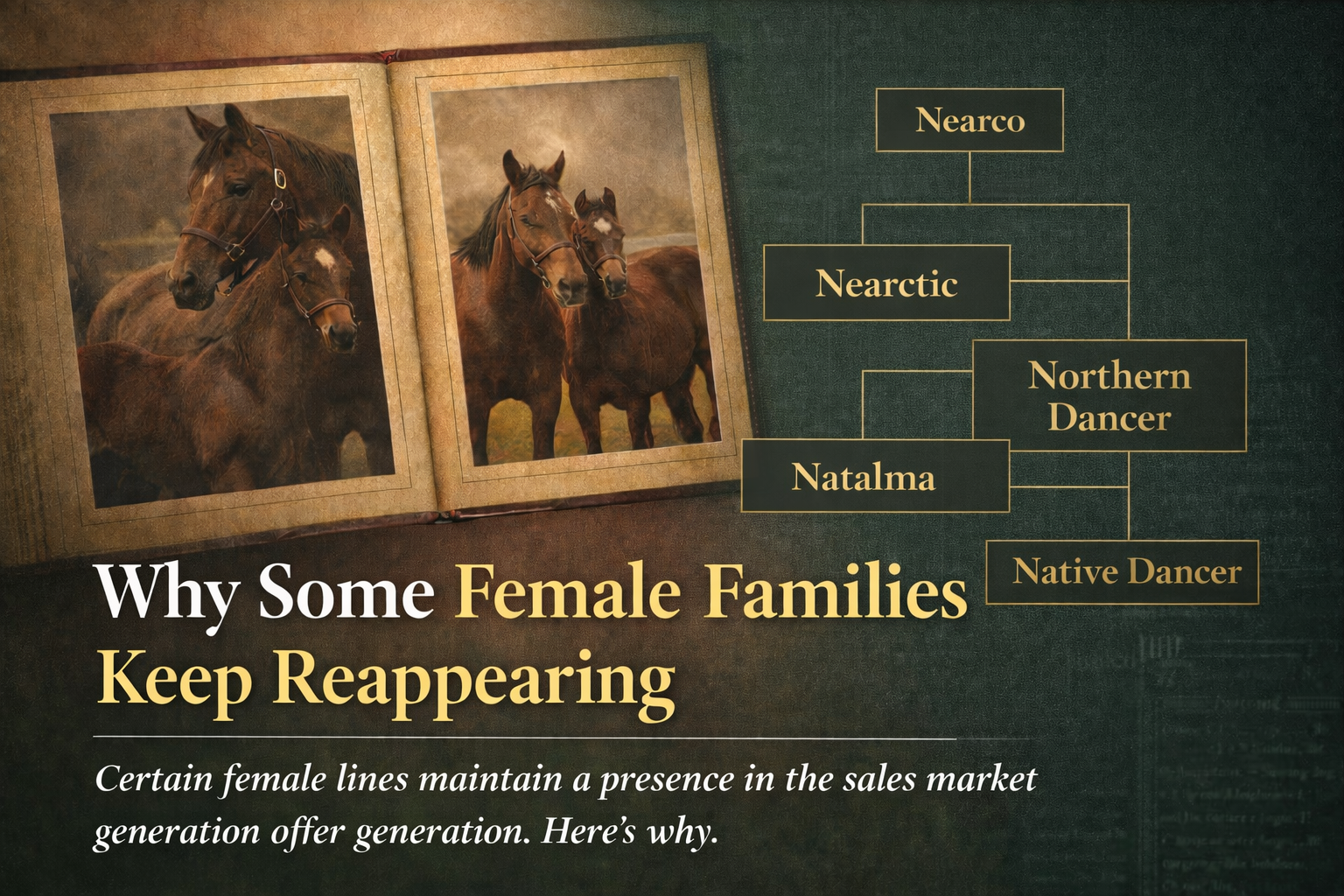
Consider Northern Dancer, a stallion whose sire line reshaped the breed. His dam, Natalma, came from a strong female family herself and descended from Native Dancer. The family’s ability to transmit class and athleticism appears across multiple generations and branches.
Female families often maintain structural integrity longer than commercial sire trends. A fashionable sire can fall out of favor within a few crops. A strong female family can persist for decades.
How Signal Emerges in Female Families
Horse Sense evaluates female family signal by measuring repeatable production patterns across generations. Families with strong signal typically show:
- Consistent performance relative to population baselines
- Reliable physical type that repeats generation after generation
- Durability and racing longevity
- Multiple productive branches rather than a single outlier
- Predictable developmental curves in yearlings and juveniles
These traits reflect both genetic inheritance and maternal influence. Strong families continue to surface in sale catalogues even as commercial preferences shift.
Why Buyers Continue to Follow These Families
In an era of large stallion books and aggressive first crop promotion, buyers increasingly look to female line strength for downside protection. High signal families tend to produce:
- Higher floor values even with mid range sires
- Better risk adjusted outcomes for pinhookers
- Predictable broodmare prospects with generational depth
- Market recognition that builds buyer confidence
A strong sire may sell the cover. The female family often sells the future.
Not All Recurring Families Rise for the Same Reason
Some female lines reappear because they consistently produce elite performance. Others produce physical types that the market prefers. Some are supported by influential breeders who continue to invest in the family. Occasionally, a previously quiet branch resurfaces after one key mare injects new strength.
Understanding these patterns requires more than reading black type. It involves analyzing:
- Performance rate versus population baseline
- Physical and mental consistency across branches
- Durability trends over time
- Long term impact of sire selection
- Outlier production events, positive or negative
The Bottom Line
The recurring presence of certain female families is not luck. It reflects lineage structure and repeatable transmission. These families carry traits that persist across generations and appear in both racing and commercial outcomes.
In a data rich environment, insight comes from recognizing female family signal. Breeders and buyers who understand that signal position themselves with greater stability and clearer expectations.
Horse Sense Pedigree Analytics