
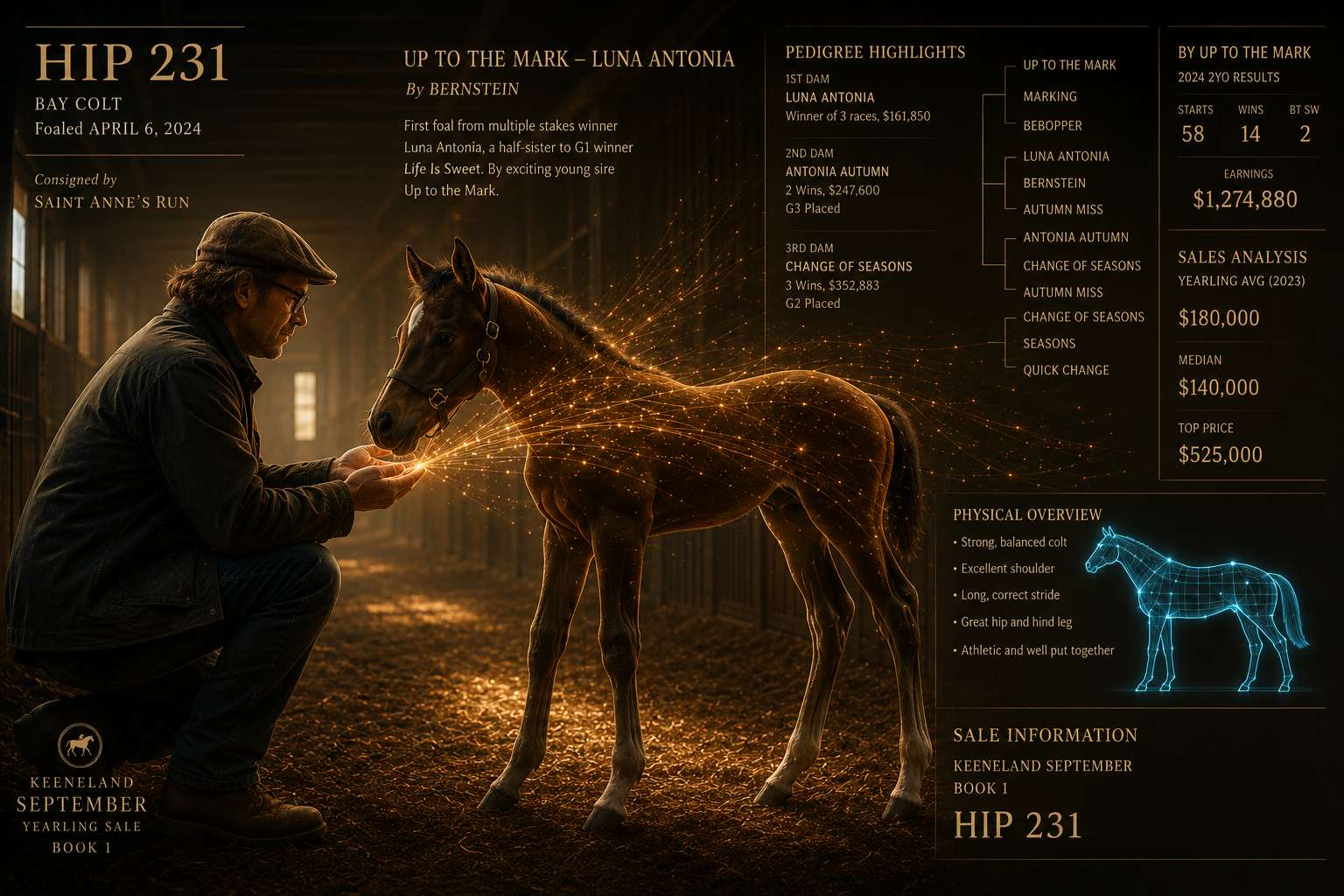
AI Doesn't Replace Expertise. It Scales It.
The real opportunity is not replacing experienced horsemen. It is allowing their knowledge and judgment to reach further.
One of the most common fears surrounding artificial intelligence is that it will eventually replace experienced professionals.
Horse racing is no different.
Spend enough time around a sales pavilion, breeding farm, or training center and you will eventually hear someone say:
“A computer will never pick horses better than I can.”
They may be right.
But that is probably the wrong question.
The real question is not whether AI can replace expertise. The question is whether it can multiply it.
Expertise Is Built One Horse at a Time
Think about the best horsemen you have ever met: the great breeders, successful trainers, respected bloodstock agents, and farm managers everyone seems to call for advice.
What makes them valuable is not that they know one thing no one else knows.
It is that they have spent decades building an enormous library of experience through every horse they have handled, every mating they have planned, every yearling they have evaluated, every sale they have attended, every mistake they have made, and every success they have earned.
Over time, those experiences become judgment.
And that judgment is one of the most valuable assets in horse racing.
Judgment Does Not Scale Easily
The problem is that judgment does not scale.
One experienced breeder can only evaluate so many mares.
One respected bloodstock agent can only walk so many yearlings.
One trainer can only spend so much time watching horses train.
Expertise eventually runs into the limits of time.
Artificial intelligence changes that equation, not because it creates expertise, but because it allows experts to apply their expertise more efficiently.
AI Can Move the Research Before the Judgment
Imagine a breeder who normally spends four hours researching a mating.
AI does not make the final recommendation. It gathers the information, organizes the evidence, identifies comparable examples, and challenges assumptions.
By the time the breeder sits down to evaluate the mating, much of the research has already been assembled.
Instead of spending four hours collecting information, the breeder can spend more of that time thinking.
That is a much better use of expertise.
This is also the purpose behind Horse Sense's analytical process : organize the pedigree, physical, market, and commercial evidence so the advisor can spend more time interpreting the decision rather than searching for the underlying information.
The Same Principle Applies Across the Industry
A bloodstock agent can spend more time evaluating horses instead of searching for information.
A trainer can spend more time watching horses instead of reviewing scattered reports.
A veterinarian can spend more time treating horses instead of piecing together medical histories from multiple sources.
Artificial intelligence does not remove experts from the process.
It removes the friction surrounding the process.
That distinction matters because the industry often assumes efficiency means replacing people, when the greater opportunity may be making the people we already trust dramatically more effective.
Better Information Can Make Professionals More Valuable
Imagine if your veterinarian had instant access to every relevant medical record before arriving at the barn.
Imagine if your bloodstock agent had already compared every commercial sale that matched your buying criteria.
Imagine if your trainer walked onto the track already knowing which workout patterns were worth discussing that morning.
None of those professionals becomes less valuable.
They become more valuable because their expertise reaches further and less of their time is consumed gathering information.
The same principle applies to Thoroughbred sales analysis , where historical sales information can be organized before the horse is evaluated so the horseman can concentrate on whether the individual represents value.
AI Does Not Replace Judgment. It Protects It.
That is what AI does well.
It does not replace judgment.
It protects it.
Every hour an experienced horseman spends searching through databases, copying notes, organizing spreadsheets, or chasing information is an hour that person is not applying the experience that makes them valuable.
Artificial intelligence can give some of that time back.
The Strongest Horsemen May Benefit the Most
Perhaps the greatest misunderstanding about AI is that it competes with experts.
I think the opposite is true.
The people who may benefit most from artificial intelligence are the people who already possess the strongest judgment.
They are best positioned to evaluate the information AI produces, challenge weak conclusions, and apply the analysis in the real world.
That ability to distinguish strong evidence from a weak conclusion is especially important in areas such as bloodstock value prediction , where a forecast should support a commercial decision rather than be mistaken for certainty.
Experience Operating at a Higher Level
When decades of horsemanship are combined with faster access to organized information, better questions, and deeper analysis, the result is not artificial intelligence replacing experience.
It is experience operating at a higher level.
That is why I do not believe AI will replace the best horsemen.
I believe it will make the best horsemen even better.