
What Artificial Intelligence Will Never Replace
Artificial intelligence can improve the information behind a decision. It can never assume responsibility for the horse affected by that decision.
Throughout this series, I have argued that artificial intelligence can help horsemen make better decisions.
It can organize information, identify patterns, challenge assumptions, and encourage more disciplined thinking.
Used properly, it may become one of the most valuable decision-support tools the horse industry has seen.
None of that changes one simple fact:
Artificial intelligence will never be responsible for the horse.
Responsibility Will Always Belong to People
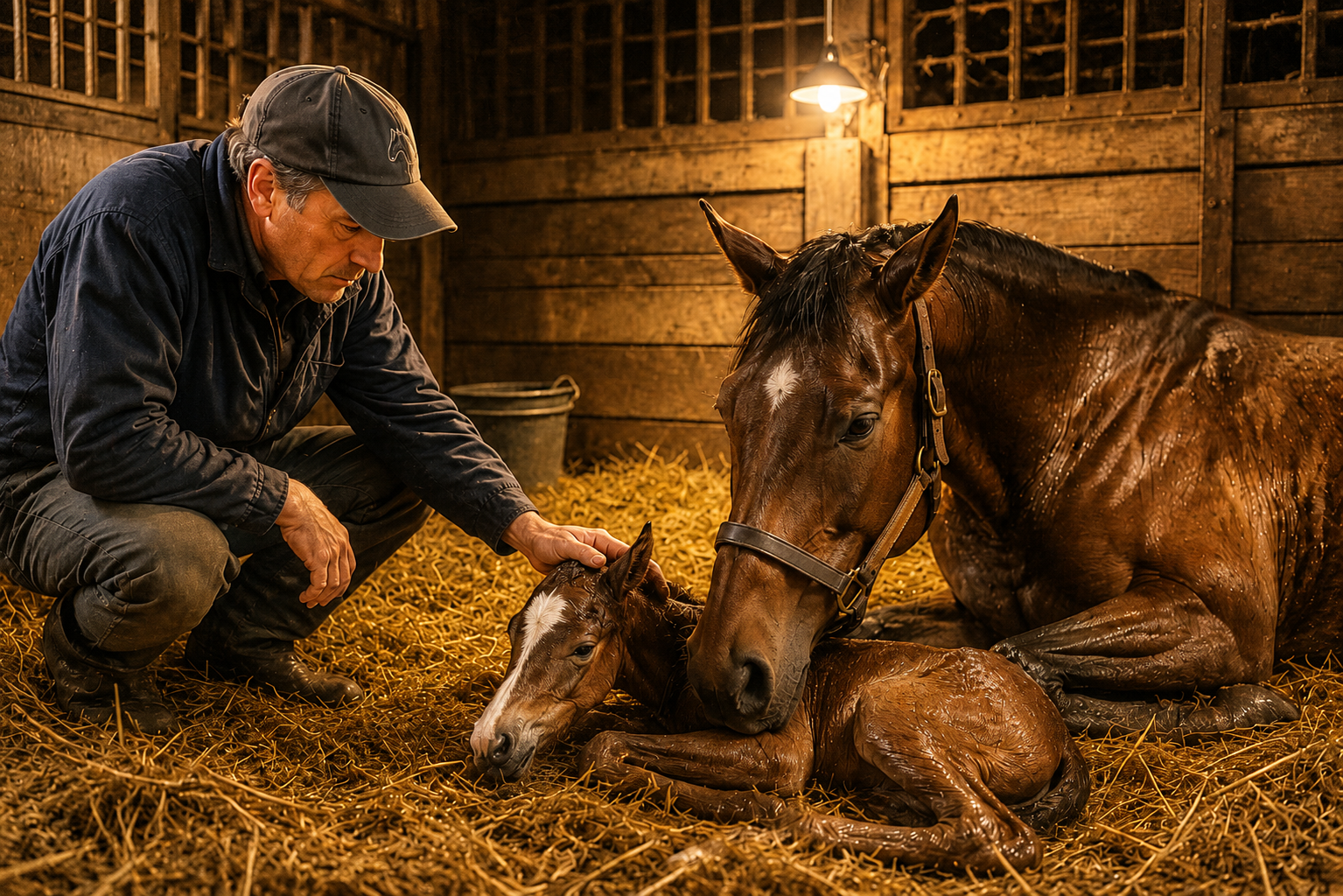
A computer does not walk the shed row before daylight and notice that a mare seems quieter than usual.
It does not recognize a subtle change in a horse's attitude or feel the difference between a horse that is tired and one that may be beginning to go wrong.
It does not stand in the foaling stall at two o'clock in the morning.
It does not make the difficult decision to retire a horse whose best interests no longer align with the owner's ambitions.
Those decisions require more than information.
They require judgment, experience, accountability, and compassion.
That is the essence of horsemanship.
Better Information Does Not Remove Responsibility
Good horsemen have always accepted responsibility for outcomes they could never fully control.
They make difficult decisions with incomplete information, knowing that some will prove successful while others will not.
Artificial intelligence can improve the quality of those decisions.
But it cannot carry the responsibility that comes with making them.
That distinction has been central to the thinking-partner approach to artificial intelligence throughout this series.
AI can contribute evidence and perspective.
The horseman still decides.
Replacement Is the Wrong Standard
Technology is often judged by asking whether it can replace people.
But that is the wrong standard.
The better question is whether it helps people become better at what they already do.
If AI helps a breeder avoid an expensive mistake, a buyer recognize an overlooked opportunity, or a horseman ask a better question before making a decision, then it has value.
That is also the principle behind Horse Sense's analytical process : the purpose of the analysis is to improve the quality of the decision, not to remove the person responsible for making it.
The Final Decision Still Belongs to the Horseman
In every case, the final decision still belongs to the horseman.
The horse does not know whether a recommendation came from a trusted mentor, a veterinarian, a bloodstock agent, or an artificial intelligence system.
The horse only experiences the decision that was made.
That is why accountability can never be delegated to technology.
AI Cannot Accept the Consequences
Artificial intelligence may provide recommendations, but it cannot accept the consequences when those recommendations are followed.
It cannot celebrate the success of a champion it helped identify.
Nor can it bear the disappointment when a promising horse fails to meet expectations.
It cannot explain to an owner why a decision did not work.
It cannot determine whether continued pursuit of a goal remains fair to the horse.
Those responsibilities belong to the people who committed their time, resources, and judgment to the decision.
Analysis Can Support Judgment Without Replacing It
That principle applies whether the decision involves breeding, buying, training, racing, or retirement.
A bloodstock value forecast can help establish commercial expectations.
Thoroughbred sales analysis can help identify market patterns and comparable horses.
Pedigree and mating analysis can help identify strengths, risks, and alternatives.
None of those tools carries responsibility for what happens after the recommendation is made.
The horseman does.
Horsemanship Requires Qualities Technology Does Not Possess
Perhaps that is the most important lesson of this series.
The future of horse racing will not be defined by artificial intelligence alone.
It will be defined by horsemen who understand how to use AI without surrendering the qualities that have always defined good horsemanship:
- Curiosity
- Discipline
- Humility
- Experience
- Compassion
- Responsibility
Those qualities built this industry long before computers existed.
They will remain essential long after today's technology has been replaced by something more capable.
The Technology Will Change. The Responsibility Will Not.
Artificial intelligence will continue to evolve.
It will become faster, more useful, and more deeply integrated into the horse business.
That progress should be welcomed, provided we remember what the technology is meant to do.
Its purpose is not to replace the horseman.
Its purpose is to help the horseman make better decisions.
Better Decision-Making Is the Future
That has been the central argument of this entire series.
Artificial intelligence is not the future of horse racing by itself.
Better decision-making is.
AI is simply another tool that can help horsemen get there.